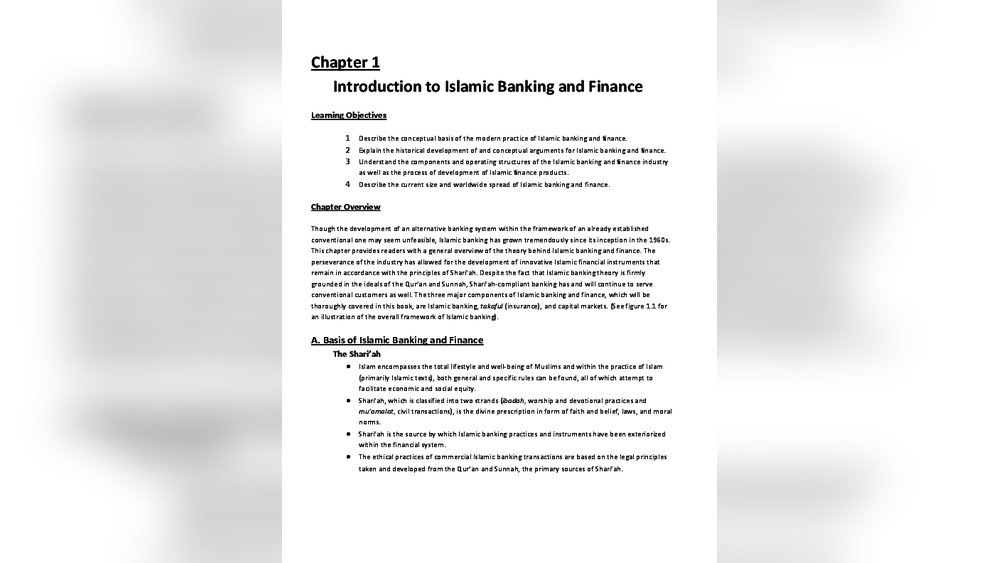
Are you curious about how Islamic finance works and why it’s gaining attention worldwide? Understanding its unique principles can open new doors for your financial knowledge and decision-making.
This “Introduction to Islamic Finance Pdf” is designed just for you—to break down complex ideas into simple, clear concepts that anyone can grasp. By exploring this guide, you’ll discover how Islamic finance differs from conventional systems, the ethics behind it, and practical applications that might affect your financial choices.
Keep reading to unlock insights that could change the way you think about money and investment.
Credit: www.researchgate.net
Basics Of Islamic Finance
Islamic finance offers a unique approach to managing money and investments. It follows specific rules based on Islamic law, called Shari’ah. These rules guide how financial activities should be conducted to ensure fairness and ethics. Understanding the basics helps in grasping how Islamic finance differs from conventional finance.
Core Principles
Islamic finance rests on several core principles. One is the prohibition of interest (riba). Charging or paying interest is not allowed. Another principle is risk-sharing. Both parties share profits and losses fairly. Islamic finance also forbids investments in harmful industries, such as alcohol or gambling. Transparency and ethical behavior are key in all transactions.
Key Terminology
Some terms are important in Islamic finance. “Murabaha” means cost-plus financing, where a seller discloses the cost and profit margin. “Mudarabah” is a partnership where one provides capital and the other manages the project. “Ijara” refers to leasing agreements. Understanding these terms helps in reading Islamic finance documents and PDFs.
Historical Background
Islamic finance has roots dating back over 1,400 years. It started with the principles found in the Quran and Hadith. These texts guide economic and social behavior. Modern Islamic finance grew in the 20th century to serve Muslim communities worldwide. It now operates in many countries, offering alternatives to conventional banking.
Credit: www.wiley.com
Shariah Law And Finance
Islamic finance operates under rules derived from Shariah law. These rules guide financial activities to ensure they align with Islamic teachings. Shariah law impacts how money is earned, invested, and shared. It promotes fairness and justice in all financial dealings.
Prohibited Elements
Islamic finance forbids certain elements that contradict Shariah law. Interest, known as riba, is strictly prohibited. Gambling or excessive risk, called gharar, is also not allowed. Investments in businesses dealing with alcohol, pork, or unethical products are banned. These rules ensure money is used in a lawful and ethical way.
Ethical Foundations
The foundation of Islamic finance is strong ethics. It focuses on fairness, transparency, and social justice. Profit must come from real economic activity, not speculation. Wealth should be shared to reduce inequality. Financial contracts must be clear and honest. This builds trust and stability in the financial system.
Role Of Shariah Boards
Shariah boards oversee and ensure compliance with Islamic principles. They review financial products and contracts carefully. Their job is to certify that all transactions meet Shariah standards. These boards consist of scholars with expertise in Islamic law and finance. Their guidance helps maintain the integrity of Islamic finance institutions.
Main Islamic Finance Products
Islamic finance uses specific products that follow Shariah rules. These products avoid interest and focus on fairness. Each product has unique features and benefits. Understanding them helps grasp how Islamic finance works.
Murabaha (cost-plus Financing)
Murabaha means cost-plus financing. The seller buys an item and sells it to the buyer with a known profit. The buyer pays in installments. This method avoids interest but allows profit. It is common in home and car financing.
Ijara (leasing)
Ijara is a leasing contract. The bank buys an asset and leases it to the client. The client pays rent for using the asset. At the end, ownership may transfer to the client. This product suits equipment and property leasing.
Mudarabah (profit Sharing)
Mudarabah is a partnership where one provides capital. The other manages the business. Profits share between them based on agreement. Losses are borne by the capital provider only. It encourages entrepreneurship and risk sharing.
Musharakah (joint Venture)
Musharakah means joint venture partnership. All partners contribute capital and share profits and losses. Each partner can manage the business. This product is used for project finance and business partnerships. It promotes cooperation and trust.
Islamic Banking Vs Conventional Banking
Islamic banking differs significantly from conventional banking. Both systems serve customers but follow distinct rules and principles. Islamic banking aligns with Shariah law, emphasizing ethical and fair financial practices. Conventional banking operates mainly on profit through interest and risk management. Understanding these differences helps grasp the unique features of Islamic finance.
Differences In Interest
Islamic banking forbids charging or paying interest, known as riba. It considers interest unfair and exploitative. Instead, Islamic banks use profit-sharing or fee-based models. Conventional banks rely heavily on interest for income. This fundamental contrast shapes how each system handles loans and deposits.
Risk Sharing Concepts
In Islamic banking, risk is shared between the bank and customers. Both parties share profits and losses fairly. This approach encourages partnership and cooperation. Conventional banks transfer most risks to borrowers. Customers repay loans with fixed interest, regardless of business success.
Operational Models
Islamic banks use contracts like Mudarabah (profit-sharing) and Musharakah (joint venture). These models promote ethical investment and transparency. Conventional banks offer fixed-rate loans and credit lines. Their focus is on maximizing returns for shareholders. Islamic banking prioritizes social justice and economic welfare.
Islamic Financial Markets
Islamic financial markets operate under principles that follow Islamic law, known as Shari’ah. These markets avoid interest-based transactions and promote fairness and transparency. They provide alternatives to conventional financial products while supporting ethical investments. Key components include Sukuk, Islamic equity funds, and Takaful.
Sukuk (islamic Bonds)
Sukuk are financial certificates similar to bonds but comply with Islamic law. They represent ownership in an asset, project, or investment. Unlike conventional bonds, Sukuk do not pay interest. Instead, investors earn returns from profit-sharing or rental income. This structure avoids prohibited interest (riba) and shares risk among participants.
Islamic Equity Funds
Islamic equity funds invest in stocks that meet Shari’ah guidelines. These funds exclude companies involved in alcohol, gambling, or interest-based finance. The focus is on ethical and socially responsible investments. Investors support businesses that comply with Islamic ethics and contribute to economic growth.
Takaful (islamic Insurance)
Takaful is a cooperative insurance system based on mutual help. Participants contribute to a shared pool to cover losses and risks. It avoids uncertainty (gharar) and gambling (maysir) found in conventional insurance. Takaful promotes solidarity and financial protection within the community.
Benefits Of Islamic Finance
Islamic finance offers unique benefits that attract many people worldwide. It promotes fairness, social justice, and responsible investing. This financial system follows clear rules based on Islamic law, which helps build trust and confidence. The benefits of Islamic finance go beyond money. It impacts society and the economy positively.
Ethical Investment
Islamic finance avoids interest and harmful activities. It invests only in businesses that follow moral values. This means no gambling, alcohol, or tobacco funding. Investors feel safe their money supports good causes. Ethical investment helps create a better world.
Financial Inclusion
Islamic finance provides access to financial services for all people. It offers products suitable for those who avoid interest-based transactions. Many find it easier to save, borrow, and invest. This inclusion promotes economic growth and reduces poverty. More people can join the financial system.
Stability And Risk Management
Islamic finance shares risks between investors and borrowers. It avoids excessive uncertainty and speculation. This approach leads to more stability in financial markets. Institutions follow strict rules to manage risks carefully. It helps protect the economy from sudden shocks.
Challenges And Limitations
Islamic finance offers a unique approach to banking and investment based on Shariah law. Despite its growth, this field faces several challenges and limitations. These hurdles affect its expansion and acceptance worldwide. Understanding these issues helps to grasp the full picture of Islamic finance.
Regulatory Issues
Islamic finance operates under different rules than conventional finance. Many countries lack clear regulations for Islamic financial products. This causes uncertainty for investors and institutions. Without proper laws, Islamic banks struggle to compete fairly. Regulatory gaps slow down the growth of Islamic finance globally.
Standardization Problems
Islamic finance relies on Shariah compliance, but interpretations vary. Different scholars and regions have different views on what is allowed. This creates inconsistency in financial products and contracts. Lack of standard rules makes it hard for investors to trust and compare services. Standardization is needed to build confidence and ease transactions.
Market Awareness
Many people still do not understand Islamic finance principles. This limits demand for Islamic financial products. Awareness is low in non-Muslim countries and among younger generations. Educating the public can help increase interest and participation. More knowledge will lead to better market growth and acceptance.
Resources For Beginners
Starting to learn Islamic finance can feel overwhelming. Beginners need clear and simple resources. This section shares useful materials that explain core concepts. The resources include downloadable PDFs, books, online courses, and trusted websites. These tools help build a strong foundation in Islamic finance principles.
Recommended Pdfs And Books
PDF guides provide easy access to Islamic finance basics. A popular choice is “An Introduction to Islamic Finance” by Shaykh Mufti Taqi Usmani. It covers key principles and practices in clear language. Another useful PDF is from the CFA Institute, explaining ethics and finance concepts. Books like “Islamic Finance: Principles and Practice” offer detailed insights for beginners. These materials are often free or low-cost and perfect for self-study.
Online Courses
Online courses offer interactive learning on Islamic finance topics. Websites like Coursera and edX host beginner-friendly classes. These courses include video lectures, quizzes, and practical examples. Many courses are free to audit, allowing learners to explore at their own pace. Online programs often cover Shariah law, risk management, and financial products.
Key Institutions And Websites
Trusted institutions provide valuable information and updates. The Islamic Development Bank and AAOIFI publish standards and research. The CFA Institute offers educational resources on ethical finance. Websites like IslamicFinanceGuru and Thomson Reuters provide news and articles. Visiting these sites helps beginners stay informed and deepen their understanding.

Credit: kitaabun.com
Frequently Asked Questions
What Is Islamic Finance In Simple Terms?
Islamic finance follows Shari’ah law, prohibiting interest and promoting ethical investments. It focuses on profit-sharing and asset-backed financing.
Where Can I Download Introduction To Islamic Finance Pdf?
You can find free PDFs on sites like Archive. org and CFA Institute. Always use trusted sources to ensure authenticity.
How Does Islamic Finance Differ From Conventional Finance?
Islamic finance prohibits interest (riba) and speculative transactions, emphasizing fairness and risk-sharing, unlike conventional finance.
Why Is Islamic Finance Growing Globally?
Its ethical approach, risk-sharing, and appeal to Muslim populations drive rapid global growth in Islamic finance.
Conclusion
Islamic finance offers an ethical way to manage money and investments. It follows clear rules based on fairness and shared risk. Understanding its basics helps you appreciate its unique approach. This introduction to Islamic finance PDF is a great starting point.
It explains key ideas in simple language for easy learning. Exploring this topic broadens your knowledge of global finance options. Keep this resource handy for future reference and study.